

How to store coffee beans for maximum freshness
You pull out your bag of coffee beans, brew a cup, and the flavor is flat. No depth, no aroma, just a dull, lifeless drink that does nothing for your morning. Stale coffee is one of the most common and avoidable problems for daily drinkers. The beans themselves are not the issue. Storage is. This guide covers the four enemies of freshness, the right containers and locations, step-by-step storage routines for every scenario, and the most common mistakes people make. Follow these steps and every cup stays bold, smooth, and consistent.
Table of Contents
- What ruins coffee bean freshness?
- Choosing the right storage container and location
- Step-by-step: Daily, weekly, and long-term coffee bean storage
- Common mistakes and how to troubleshoot flavor loss
- Our expert take: What really keeps your beans fresh
- Discover fresher beans and better storage solutions
- Frequently asked questions
Key Takeaways
| Point | Details |
|---|---|
| Avoid air, heat, and moisture | Exposing beans to air, heat, and moisture quickly dulls their flavor so always use airtight containers in a cool, dry spot. |
| Opaque, airtight containers are best | Storing beans in a sealed, light-blocking container preserves taste and aroma for daily drinkers. |
| Freeze only for long-term storage | Freezing beans can extend life, but only use it for months-long preservation and follow careful portioning steps. |
| Rotate beans for peak freshness | Buy small quantities, rotate often, and use within one to two weeks after opening for the richest brew possible. |
What ruins coffee bean freshness?
Coffee beans are sensitive. Once roasted, they begin releasing carbon dioxide and slowly absorbing everything around them. Four specific factors accelerate this process and strip beans of their flavor before you ever get to brew them.
The four major flavor spoilers:
- Oxygen. Air exposure triggers oxidation, which breaks down the aromatic compounds that give coffee its flavor. Even a few hours of open-air exposure makes a noticeable difference.
- Heat. Warm environments speed up the chemical breakdown of oils inside the bean. Storing beans near a stove, oven, or sunny countertop shortens their usable life significantly.
- Moisture. Water is the fastest way to ruin a batch. Humidity causes beans to absorb moisture, which leads to mold growth and a sour, musty taste.
- Light. UV light degrades the organic compounds in coffee beans. Clear glass jars on a sunny counter look nice but actively damage your beans over time.
To preserve coffee flavor, store whole beans airtight and away from oxygen, heat, moisture, and light. Use an opaque airtight container with minimal headspace, or a bag with a one-way valve.
Whole beans hold up much better than ground coffee. Grinding increases surface area dramatically, which means more of the bean is exposed to air, heat, and moisture at once. Ground coffee can go stale within 15 to 30 minutes of grinding if left open. Whole beans, stored correctly, stay fresh for weeks.
Key fact: The enemy is not time alone. It is exposure. A bean sealed properly at two weeks old often tastes better than a bean left open for two days.
If you enjoy bold specialty blends, consider trying dark roast mushroom coffee as a format that pairs well with careful storage habits since the dense roast profile holds up well when sealed correctly.
Choosing the right storage container and location
Knowing what damages beans, it is time to select the best tools and environment for storing them correctly.
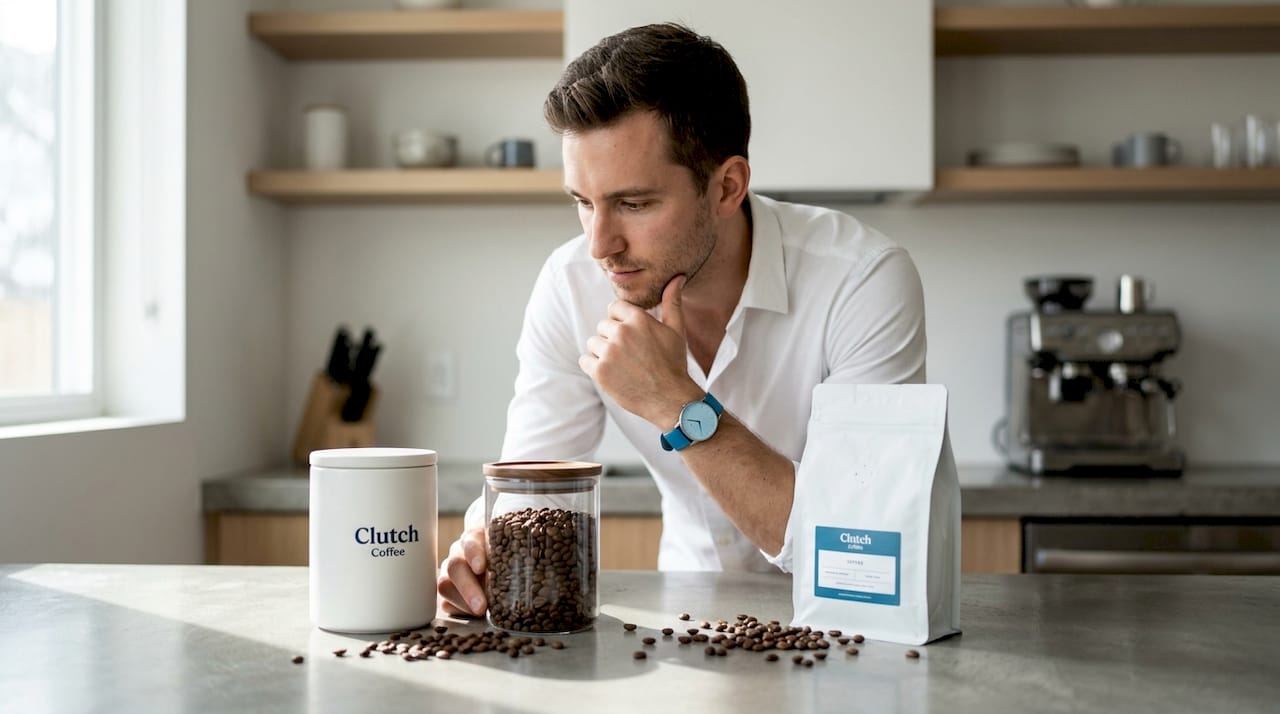
Not all containers are equal. The material, seal quality, and opacity of your container directly affect how long your beans stay fresh. Here is a quick comparison to help you choose:
| Container type | Airtight | Blocks light | Best for |
|---|---|---|---|
| Opaque ceramic canister | Yes | Yes | Daily use, countertop |
| Original valve bag (resealed) | Yes | Yes | Short-term, 1 to 2 weeks |
| Clear glass jar | Yes | No | Not recommended |
| Plastic bin (unsealed) | No | Varies | Not recommended |
| Stainless steel canister | Yes | Yes | Daily use, pantry |
| Vacuum-sealed container | Yes | Depends on color | Best for weekly rotation |
The original bag your beans came in is often underrated. Most specialty roasters, including fresh-roasted brands, pack beans in bags with one-way valves. These valves let carbon dioxide escape without letting oxygen in. Press out the air, fold the top down tightly, and clip it shut. That bag can serve you well for the first week or two.
What to look for in a storage container:
- Airtight lid with a rubber or silicone seal
- Opaque material (ceramic, stainless steel, or dark-colored plastic)
- Size that matches your typical weekly consumption
- Easy to open and close without letting in excess air
The core method for daily drinkers is straightforward: buy whole beans, keep them in an airtight container that protects from light in a cool and dark place, and rotate through smaller quantities so you stay inside the beans’ freshness window.
Location matters as much as the container. A dark pantry shelf away from the stove is ideal. Room temperature storage between 60 and 75 degrees Fahrenheit works well for most home environments. Avoid the countertop near heat sources, above the refrigerator (which generates warmth), or next to a window.
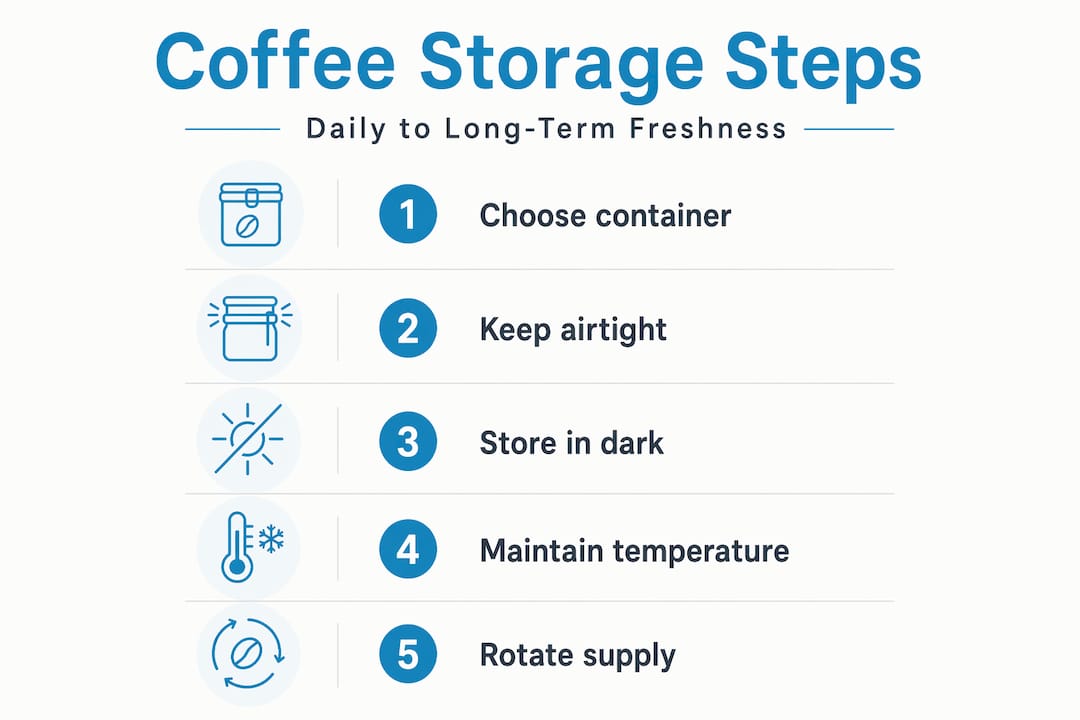
Buying smaller quantities more frequently is one of the most effective strategies for flavor. A 12-ounce bag used within two weeks will always taste better than a 2-pound bag that sits open for a month. Explore premium coffee beans in smaller batch sizes if you want to stay inside the freshness window consistently.
For those who travel frequently or want a no-storage-required option, instant coffee options provide a practical alternative with zero freshness concerns.
Pro Tip: Label your container with the roast date when you transfer beans. Most roasters print this on the bag. Knowing the roast date helps you track how long beans have been stored and when to use them by.
Step-by-step: Daily, weekly, and long-term coffee bean storage
You have got the right tools and storage area. Now here are the exact steps for daily, weekly, and long-term storage.
Daily storage routine:
- Measure out only what you need for that day’s brewing.
- Reseal the container or bag immediately after measuring. Do not leave it open while the kettle heats.
- Store the container in a cool, dark pantry or cabinet away from heat sources.
- Keep the container away from direct sunlight, even indirect light through a window.
- Grind only what you need right before brewing. Pre-grinding and storing ground coffee accelerates staleness.
Weekly rotation strategy:
- Buy beans in quantities you can use within 7 to 14 days.
- At the start of each week, check the roast date on your current bag.
- If you have multiple bags, use the oldest roast date first.
- Transfer beans to your airtight container at the start of the week rather than repeatedly opening the original bag.
- Taste your coffee mid-week. If flavor seems flat, check your seal and storage location.
Long-term storage and freezing workflow:
Freezing is a valid option for long-term storage, but only when done carefully. Freezing extends freshness for months, but requires portioning first, sealing airtight and moisture-proof, avoiding repeated thaw and refreeze cycles, and keeping beans sealed until they reach room temperature before opening.
- Divide beans into single-use portions before freezing. Use small zip-lock freezer bags or vacuum-sealed pouches.
- Remove as much air as possible from each portion before sealing.
- Label each portion with the roast date and freeze date.
- Store portions flat in the freezer to minimize space and prevent cracking.
- When ready to use, remove one portion and leave it sealed on the counter until it reaches room temperature. This prevents condensation from forming on the beans.
- Never return thawed beans to the freezer.
Here is a reference table for how long beans stay fresh in each storage scenario:
| Storage method | Expected freshness window | Notes |
|---|---|---|
| Room temp, airtight, dark | 2 to 4 weeks | Best for daily drinkers |
| Original valve bag, resealed | 1 to 2 weeks | Good short-term option |
| Freezer, portioned and sealed | 2 to 6 months | For bulk buying only |
| Open container, room temp | 3 to 5 days | Not recommended |
| Ground coffee, airtight | 1 to 2 weeks | Brew sooner for best results |
For cold brew preparation specifically, freshness of the bean matters more than many people realize since cold brew steeps for 12 to 24 hours and extracts differently than hot methods. Using properly stored beans for cold brew coffee makes a measurable difference in the final flavor.
CNET’s coffee storage guidance also confirms that the combination of airtight sealing and consistent temperature is the most reliable approach for home storage.
Pro Tip: If you use single serve coffee capsules, storage is already handled by the sealed capsule format. This is a practical option when you want zero storage management.
Common mistakes and how to troubleshoot flavor loss
With storage techniques covered, here are the mistakes that lead to flavor loss and how to solve them.
Most common storage mistakes:
- Storing beans in the fridge. The refrigerator is humid and full of odors. Beans absorb both. The result is flat, off-tasting coffee with a faint smell of last night’s dinner.
- Repeated air exposure. Opening and closing a large bag multiple times a day lets in fresh oxygen each time. Use a smaller transfer container for daily access.
- Using clear glass containers. They look clean and organized, but light exposure degrades bean quality over time.
- Buying too much at once. A 5-pound bag seems economical, but if it takes two months to finish, the last third of that bag will taste noticeably worse than the first.
- Storing near heat sources. Beans kept above a stove or near a coffee machine that radiates heat will stale faster than beans in a cool pantry.
Storage reality check: If your coffee tastes flat and you have not changed your brewing method, the problem is almost always storage. Check the seal on your container, move it away from heat and light, and buy a smaller quantity next time.
Some storage advice emphasizes that for everyday pantry use, room-temperature sealed storage is often sufficient and that freezing may be unnecessary if beans will be consumed quickly. This is practical guidance for most daily drinkers who go through a bag within two weeks.
Quick flavor recovery steps:
- Check your container seal. Replace it if the gasket is worn or cracked.
- Move beans to a cooler, darker location immediately.
- If beans are older than three weeks and stored improperly, brew them as cold brew since the long steep can extract more from faded beans.
- For your next purchase, buy a smaller quantity and use it within 10 to 14 days.
If you want a blend that holds up well even with moderate storage variation, medium roast mushroom coffee offers a balanced flavor profile that stays consistent across different brewing methods.
Our expert take: What really keeps your beans fresh
Here is an honest perspective from the Clutch Coffee team after working with fresh-roasted beans daily.
Most of the conversation around coffee storage gets complicated fast. Vacuum sealers, nitrogen-flushed canisters, precise humidity controls. These tools exist and some of them help at the margins. But for the average daily drinker, they are not the deciding factor in cup quality.
The two things that actually matter are airtightness and rotation. A simple opaque canister with a tight lid, combined with buying beans in quantities you finish within two weeks, will outperform any fancy storage system paired with a bulk bag that sits open for a month.
The freezer debate is a good example of overcomplicated advice. Freezing works. It genuinely extends freshness for months when done correctly. But most daily drinkers do not need it. If you buy a 12-ounce bag and finish it in 10 days, you never need to think about freezing. The complexity of portioning, sealing, and thawing is only worth it when you are buying in bulk or receiving a large shipment of fresh roasted beans and cannot use them all within a few weeks.
Small batch buying is the most underrated storage strategy. It removes the problem entirely. You buy less, you use it faster, and you always have fresh coffee. The cost difference between a 12-ounce bag and a 2-pound bag rarely justifies the flavor loss from the last few weeks of a large bag.
Keep it simple. Keep it sealed. Buy what you will use in two weeks. That is the entire system.
Discover fresher beans and better storage solutions
Proper storage starts with quality beans. If the beans were not fresh to begin with, no container or technique will fix that.

Clutch Coffee roasts every batch fresh before shipping, which means the beans arrive at peak freshness and give you the maximum storage window to work with. Whether you prefer a smooth cold brew medium roast or want to explore the full range of blends, starting with fresh-roasted beans makes every storage tip in this guide more effective. Browse the full selection and shop coffee beans that are built for daily performance, bold flavor, and consistent quality from the first cup to the last.
Frequently asked questions
How long can coffee beans stay fresh after opening?
Coffee beans are best used within 1 to 2 weeks after opening when stored in an airtight container in a cool, dry location. Beyond that window, flavor begins to noticeably decline.
Should I store coffee beans in the fridge?
Storing coffee beans in the fridge is not recommended because moisture ruins flavor and beans absorb surrounding odors easily. A cool, dark pantry at room temperature is the better option.
Can freezing coffee beans extend freshness?
Freezing beans can extend freshness for months, but portion first and seal airtight before freezing. Never refreeze thawed beans, and always let them reach room temperature before opening the sealed portion.
What is the best container for storing coffee beans?
An opaque, airtight container or the original bag with a one-way valve pressed flat and clipped shut is ideal. Stainless steel and ceramic canisters with rubber-sealed lids are reliable everyday options.