

Types of coffee bean origins explained for enthusiasts
Walk into any specialty coffee shop and you will find beans from a dozen different countries, each with a different roast level, processing method, and flavor description. Choosing well is harder than it looks. Understanding the types of coffee bean origins is the fastest way to cut through the noise and start buying beans that actually match what you want in your cup. This article covers the four main species, the regions that produce the most distinctive flavors, and the environmental factors that make each origin taste the way it does.
Table of Contents
- Understanding coffee bean species and their global origins
- Key coffee producing regions and their flavor profiles
- How altitude, climate, and processing shape coffee flavors by origin
- Rare and niche coffee origins: Liberica and Excelsa explained
- Comparing coffee origins: choosing the right bean for your brew and taste
- Our take on coffee origins and what actually matters
- Fresh roasted, origin-informed coffee from Clutch Coffee
- Frequently asked questions
Key Takeaways
| Point | Details |
|---|---|
| Four main bean species | Arabica, Robusta, Liberica, and Excelsa define global coffee flavors and growing conditions. |
| Origin shapes flavor | Terroir factors like altitude, climate, and processing create distinctive regional coffee tastes. |
| Ethiopia excels in aromatics | High-altitude Ethiopian Arabica offers complex floral and fruity notes sought by enthusiasts. |
| Robusta adds strength | Robusta’s higher caffeine and crema make it essential in espresso blends for body and kick. |
| Rare beans add complexity | Liberica and Excelsa provide unique woody and fruity notes for adventurous coffee drinkers. |
Understanding coffee bean species and their global origins
To start, it is important to understand the primary types of coffee beans you will encounter and their global origins. Not all coffee is the same plant. The species determines the base flavor, caffeine level, and where the bean can be grown.
Four main commercial species exist: Arabica, Robusta, Liberica, and Excelsa. Each occupies a different niche in the global market and grows best under specific conditions.
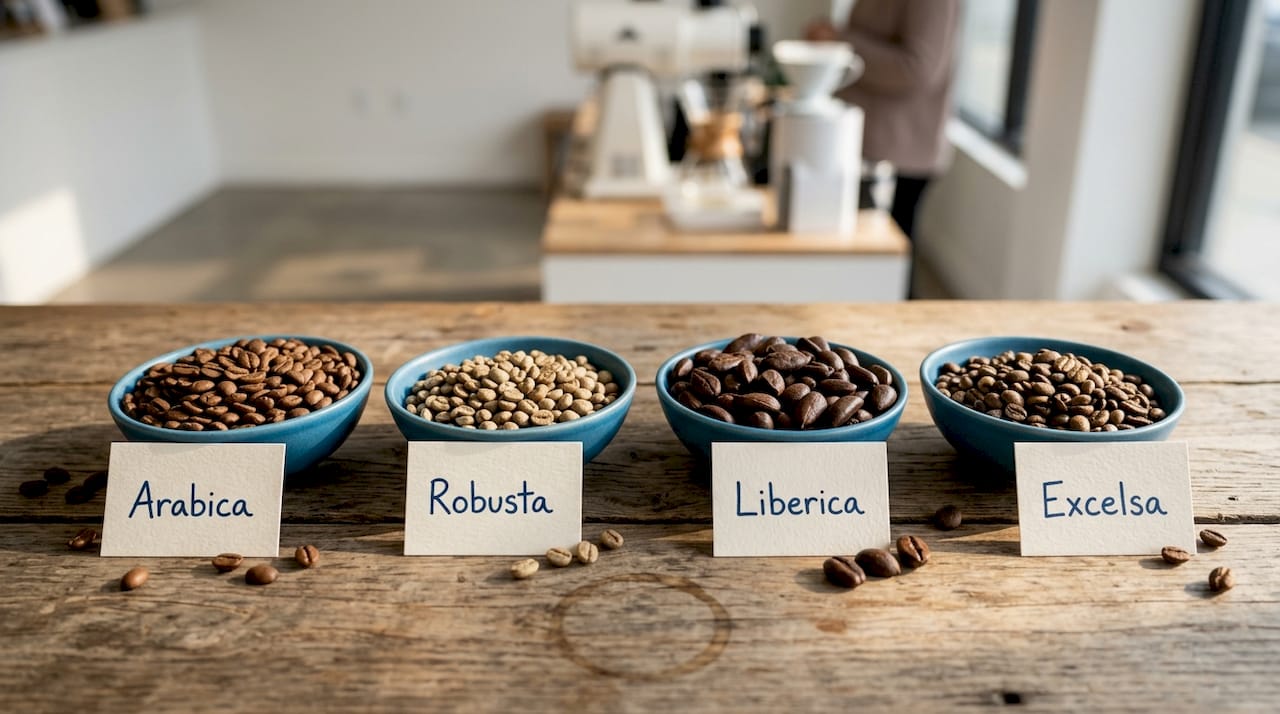
Arabica dominates global production at 60 to 70 percent of total output, while Robusta accounts for 30 to 40 percent. Liberica and Excelsa together represent a small fraction of what reaches consumers worldwide.
Here is a breakdown of each species:
- Arabica (Coffea arabica): Grown at high altitudes, typically 1,800 to 6,300 feet. Produces a smooth, mildly acidic cup with complex fruit and floral notes. Susceptible to disease, which makes it more expensive to grow.
- Robusta (Coffea canephora): Thrives at lower altitudes and tolerates heat and pests better than Arabica. Contains nearly twice the caffeine and delivers a stronger, more bitter flavor with a thick crema.
- Liberica (Coffea liberica): Grown primarily in the Philippines and Malaysia. Produces large, irregularly shaped beans with a woody, smoky aroma that is unlike any other species.
- Excelsa (Coffea liberica var. dewevrei): Now classified as a subspecies of Liberica. Adds tart, wine-like brightness to blends and is valued for the complexity it brings rather than standalone drinking.
Geography matters as much as genetics. Arabica needs cool temperatures and well-drained volcanic soil. Robusta grows well in humid lowlands across West Africa and Southeast Asia. Knowing the species tells you what to expect before you even open the bag.
Key coffee producing regions and their flavor profiles
With species in mind, let us explore specific global regions that shape coffee’s unique flavors. The country of origin is not just a label. It is a shorthand for soil type, rainfall patterns, altitude range, and the processing traditions that farmers have developed over generations.
Ethiopian coffee is bright and floral, with jasmine and blueberry notes. Colombian coffee is balanced, with caramel and chocolate. Brazilian coffee offers nutty chocolate with low acidity. Sumatran coffee is earthy with dark chocolate depth. Each of these profiles comes directly from where and how the beans are grown.
Regional flavor breakdown:
- Ethiopia: The birthplace of Arabica coffee. Beans grown in Yirgacheffe and Sidama regions produce jasmine, bergamot, and blueberry notes. Naturally processed Ethiopian lots can taste almost like fruit juice.
- Colombia: High-altitude farms in Huila and Nariño produce a clean, balanced cup. Expect red apple, brown sugar, and mild citrus. Colombia’s geography allows two harvests per year, which supports consistent supply.
- Brazil: The world’s largest producer. Santos and Minas Gerais regions deliver a nutty, chocolate-forward profile with low acidity and a heavy body. Ideal for espresso blends.
- Sumatra (Indonesia): Wet-hulled processing gives Sumatran coffee a distinctly earthy, full-bodied character. Mandheling and Gayo are the most recognized growing areas.
| Region | Primary flavor notes | Acidity | Body | Best brew method |
|---|---|---|---|---|
| Ethiopia | Floral, berry, citrus | High | Light | Pour-over, Aeropress |
| Colombia | Caramel, apple, chocolate | Medium | Medium | Drip, pour-over |
| Brazil | Nutty, chocolate, molasses | Low | Heavy | Espresso, French press |
| Sumatra | Earthy, cedar, dark chocolate | Low | Heavy | French press, espresso |
| Kenya | Blackcurrant, tomato, wine | High | Medium | Pour-over |
If you want a starting point for African origins, the African espresso blend from Clutch Coffee delivers those floral and fruit-forward notes in a format built for espresso. For a smoother, more balanced everyday cup, the Latin American blend covers Colombia and its neighbors well.
Pro Tip: If you are new to exploring coffee bean varieties, the best sellers sample pack is a practical way to taste multiple origins side by side without committing to a full bag of each.
How altitude, climate, and processing shape coffee flavors by origin
Understanding the geography of coffee also means knowing how environmental factors and processing methods influence each origin’s cup. Two farms in the same country can produce completely different tasting coffees based on elevation alone.
Terroir, which includes soil, altitude, climate, and processing, directly influences how a coffee bean develops its flavor compounds. Beans grown above 5,000 feet mature more slowly because of cooler temperatures. That slower maturation allows more complex sugars to develop inside the cherry, which translates to brighter acidity and more layered flavor in the cup.
Processing method is the other major variable. Here is how each method changes the flavor:
- Washed (wet) processing: The fruit is removed before drying. Result is a clean, bright, floral cup where the bean’s natural character comes through clearly. Common in Ethiopia and Kenya.
- Natural (dry) processing: The whole cherry dries around the bean. Result is a fruity, wine-like, sometimes fermented flavor. Common in Brazil and some Ethiopian lots.
- Honey processing: A middle path where some fruit pulp remains during drying. Produces a sweet, syrupy body with mild fruit notes. Common in Costa Rica and El Salvador.
- Wet-hulled (Giling Basah): Unique to Sumatra. The parchment layer is removed while the bean still has high moisture content. This method creates earthy, heavy-bodied coffee with low acidity and a distinctive musty complexity.
Altitude and processing are not secondary details. They are the primary reason two coffees from the same species can taste nothing alike.
Climate adds another layer. Volcanic soil in Guatemala and Costa Rica is rich in minerals that contribute to a clean sweetness. The monsoon winds in India’s Malabar coast create a unique aging effect on beans, producing a low-acid, heavy-bodied cup that has no equivalent elsewhere.
Pro Tip: When buying beans, check the bag for altitude information. Beans grown above 4,500 feet tend to have more complex flavor. Pair that with a roast date within the last four weeks and you are working with the best possible raw material. The medium roast from Clutch Coffee lists origin details and is roasted fresh before shipping.
Rare and niche coffee origins: Liberica and Excelsa explained
Beyond the common species and regions, some rare coffees like Liberica and Excelsa offer intriguing flavors worth knowing about. These are not coffees you will find at every grocery store, but understanding them rounds out your knowledge of the full spectrum of coffee bean varieties.
Liberica beans are large, woody, and smoky, grown mainly in the Philippines and Malaysia. The trees themselves are significantly larger than Arabica or Robusta plants, and the beans are asymmetrical with an elongated tip. Liberica was actually the dominant commercial coffee in the late 1800s before a disease called coffee leaf rust wiped out most of the global crop. Today it survives in niche markets, particularly in the Philippines where it is known locally as Barako.
Excelsa, now a Liberica subspecies, offers tart, fruity acidity that blenders use to add complexity and a lingering finish to otherwise flat blends. On its own, Excelsa can taste unusual to drinkers accustomed to Arabica. In a blend, it contributes a brightness that is difficult to achieve with any other bean.
Key facts about these rare origins:
- Liberica grows at low to mid altitudes and produces low yields, which keeps supply limited and prices unpredictable.
- Excelsa is cultivated primarily in Southeast Asia, particularly Vietnam and the Philippines.
- Both species stale faster than Arabica once roasted, so freshness matters even more.
- Neither is widely available as a single-origin product. Most exposure comes through specialty blends.
- For adventurous drinkers, seeking out a Liberica or Excelsa blend is a genuine education in how different coffee can taste outside the Arabica and Robusta spectrum.
Comparing coffee origins: choosing the right bean for your brew and taste
Now that we have explored individual origins, let us compare their key attributes side by side for easier selection. The goal is to match your preferred flavor and brewing method to the origin that delivers it most reliably.
Arabica offers lower caffeine and smooth body, while Robusta delivers higher caffeine, a more bitter profile, and a thick, persistent crema. Neither is objectively better. They serve different purposes.
| Bean type | Origin region | Flavor profile | Caffeine level | Best brew method |
|---|---|---|---|---|
| Arabica | Ethiopia, Colombia, Kenya | Floral, fruity, sweet | Lower | Pour-over, drip, Aeropress |
| Robusta | Vietnam, Uganda, India | Bitter, earthy, bold | Higher | Espresso, moka pot |
| Liberica | Philippines, Malaysia | Woody, smoky, floral | Medium | French press |
| Excelsa | Vietnam, Philippines | Tart, fruity, complex | Medium | Blends, pour-over |
| Brazilian Arabica | Brazil | Nutty, chocolate, low acid | Lower | Espresso, French press |
| Sumatran Arabica | Indonesia | Earthy, cedar, full body | Lower | French press, espresso |
How to select your coffee based on taste and brew method:
- Identify your preferred flavor direction: fruity and bright, or chocolate and earthy.
- Match that direction to a region: Ethiopia and Kenya for bright; Brazil and Sumatra for earthy.
- Choose your brew method: pour-over for clarity and brightness; French press or espresso for body and richness.
- Decide between single origin and blend: single origins highlight one region’s character; blends offer consistency.
- Check the roast date and processing method on the bag before buying.
Pro Tip: Blends built around two or three complementary origins almost always deliver more consistency cup to cup than single origins. A Brazilian base adds body and sweetness, while a Colombian or Ethiopian component brings brightness. That combination is why most commercial espresso blends are built this way. Browse the premium coffee beans collection to see how Clutch Coffee applies this approach across its lineup.
Our take on coffee origins and what actually matters
Most coffee content tells you that origin is everything. The reality is more practical than that. Origin sets the ceiling for what a coffee can taste like. Roast date, grind consistency, and water temperature determine whether you actually reach that ceiling.
A flawlessly sourced Ethiopian natural processed bean will taste flat and stale if it was roasted six months ago and ground with a blade grinder. Meanwhile, a well-sourced Brazilian Arabica roasted fresh and brewed correctly will outperform that Ethiopian bean in the cup every single time. Origin matters. Freshness matters more.
The second overlooked point is that most drinkers do not actually want maximum complexity. They want a coffee that tastes good reliably. That is not a failure of sophistication. It is a legitimate preference. Blends exist precisely because they deliver consistency that single origins, by nature, cannot always match. A single-origin Ethiopian lot from one harvest will taste different from the next harvest. A well-constructed blend is engineered to taste the same every time.
The practical takeaway: learn enough about the types of coffee regions to know what direction you prefer, then find a roaster who executes that direction consistently and ships fresh. That combination will do more for your daily cup than any amount of origin knowledge applied to stale beans.
Fresh roasted, origin-informed coffee from Clutch Coffee
If this article has clarified what you are looking for in a bean, the next step is finding coffee that delivers it fresh. Clutch Coffee roasts every batch before shipping so the beans you receive are at peak flavor, not sitting in a warehouse.

Whether you prefer the bright, floral character of African origins or the smooth, chocolate-forward profile of Latin American beans, Clutch Coffee has a blend built around that preference. Every product lists origin information so you know exactly what you are buying. The premium coffee beans collection covers single-origin options and multi-origin blends, all roasted fresh and shipped directly to your door. No guessing about roast dates. No stale inventory. Just consistent, bold coffee ready to perform.
Frequently asked questions
What are the main types of coffee beans?
The four main commercial species are Arabica, Robusta, Liberica, and Excelsa, with Arabica being the most widely consumed and the foundation of most specialty coffee.
How does coffee origin affect flavor?
Origin shapes flavor through altitude, soil composition, climate, and processing method, which is why Ethiopian coffee tastes fruity and floral while Sumatran coffee tastes earthy and full-bodied.
What is unique about Liberica and Excelsa beans?
Liberica features woody, smoky flavors with large, irregular beans grown mainly in the Philippines, while Excelsa adds tart, fruity brightness to blends as a subspecies of Liberica.
Why do blends often include Robusta beans?
Robusta adds body, crema, and higher caffeine to espresso blends, making it a practical choice for milk-based drinks where a strong base is needed.
How should I choose coffee beans for pour-over brewing?
Select light to medium roasts with washed or honey processing from Ethiopia, Kenya, or Colombia, as these origins and methods produce the clean, floral flavors that pour-over brewing highlights best.